Ami Sands Brodoff

WHAT'S THE NOVEL ABOUT?

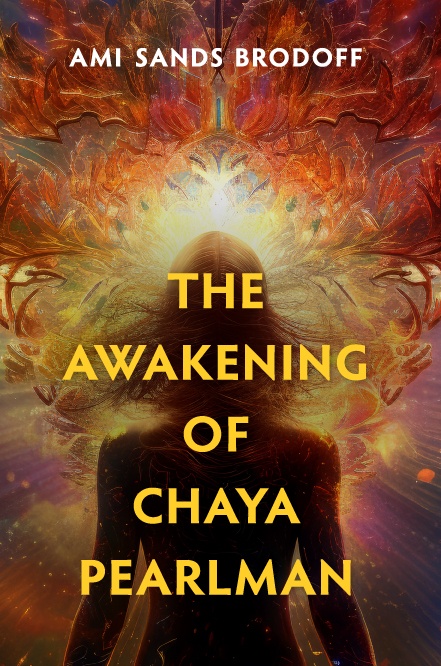
The Awakening of Chaya Pearlman centers on seventeen-year-old Chaya at a time when she has lost her way and seeks a new path forward. Chaya is born into the strict Lubavitch community in Montreal, a branch of orthodox, or Hasidic Judaism. As a questioner and an artist, she begins to find her community an awkward fit as she grows into adolescence and young womanhood.

Chaya grapples with a central mystery in her life. She was told as a child that her mother died shortly after her birth. As time goes on, she doubts this story. Chaya wonders if her mother is still alive and whether she can find her. Does her mother even wish to be found? Why did she abandon Chaya? Questions haunt Chaya: who, what, when, where, how, and why? She knows that she cannot be truly whole or come into her own until she unearths buried tectonic secrets.

After Chaya flees her community with her Aunt Galit for a new life in New York, she pursues leads about her birth mother. As the story unfolds, layer by layer, it emerges that Chaya’s birth mother is alive and possesses a shocking identity that is forbidden within the Hasidic community.

Can Chaya find greater personal and intellectual freedom while leaving behind the large, enveloping family and community that she loves, but finds confining and no longer soul-sustaining? Once she locates her birth mother, what kind of bond is possible? Leaving the community that raised her, Chaya seeks to figure out the world for herself as she grows into womanhood. The novel opens a window onto the mysteries and mysticism of the sequestered Hasidic Jewish community, exploring religious orthodoxy, rebellion, and guilt, as well as the complexity of gender identity, and what love and faith mean.

THE STORY BEHIND THE STORY

I was raised in a Reform Jewish family and we retain a strong cultural identify today. My husband Michael’s extended family, however, was part of the once thriving Hasidic Jewish community in Eastern Europe and lived in a small rural village in the foothills of the Carpathian Mountains in Czechoslovakia. Michael’s grandfather, Mehel, and his grandmother, Chanca, lived in the front room of great-grandfather Yankel’s house on Synagogue Street. Michael’s mother, Brana, was one of nine children. Nearly the entire family was murdered in The Holocaust. Brana was imprisoned in three concentration camps including Theresienstadt, Mauthausen and Buchenwald. A younger sister, Sylvia, was hidden on farms by righteous Christians. One brother escaped into the British army.

All three of these survivors have now passed on.

I longed to learn more about Hasidic Judaism, which my extended family through Michael practiced for many generations until the Shoah wiped them out. I was intrigued with life in such a community, the rules and laws for living and dying, the mysticism, and in particular, the role of girls and women. What is Hasidic Judaism like today?

In addition to talking with Michael about his family history, I spent time in Montreal at the school which my heroine would have attended. The principal of the school invited me for a visit, allowed me to sit in on classes and chat with both students and teachers. In addition, I attended a Chanukah party at the branch of the Lubavitch community near me and talked to the leaders and people attending. I immersed myself in the many books and articles which focus on Lubavitch religion, life, and culture. I learned so much and am grateful. My time of immersion in a culture so different from my own was enlightening, informative and inspiring. All of this informs Chaya’s story, and hopefully, brings it to vivid life.
READING GROUP GUIDE

1.

How would you describe Chaya’s upbringing in the Lubavitch community in Montreal?

2.

How does her background differ from your own?

3.

In what ways do you think Chaya finds her community a difficult fit? What are her coping strategies?

4.

Chaya is part of a tight three-some growing up with her best friends Malkie and Levana. How does this friendship evolve and change over time? Why?

5.

What are some of the stress factors leading up to Chaya’s breakdown at age seventeen?

6.

Describe the different attitudes and characters of Chaya’s Aunt Galit and Chaya’s mother, Anat.

7.

What are some of the challenges Chaya faces when she moves to New York City with her Aunt Galit?

8.

Does Chaya’s search for her birth mother make sense to you as a reader?

9.

How does Chaya’s life change as she sleuths out more about her birth mother?

10.

What is Chaya’s attitude towards sexuality? How do you see her grappling with the restrictions of her upbringing as she meets men in New York?

11.

What are the main themes and concerns of The Awakening of Chaya Pearlman?

12.

Did you find the ending of the novel satisfying? Hopeful or mixed?

13.

What was your main takeaway from The Awakening of Chaya Pearlman?